Pillar Two: Return to Nourishment
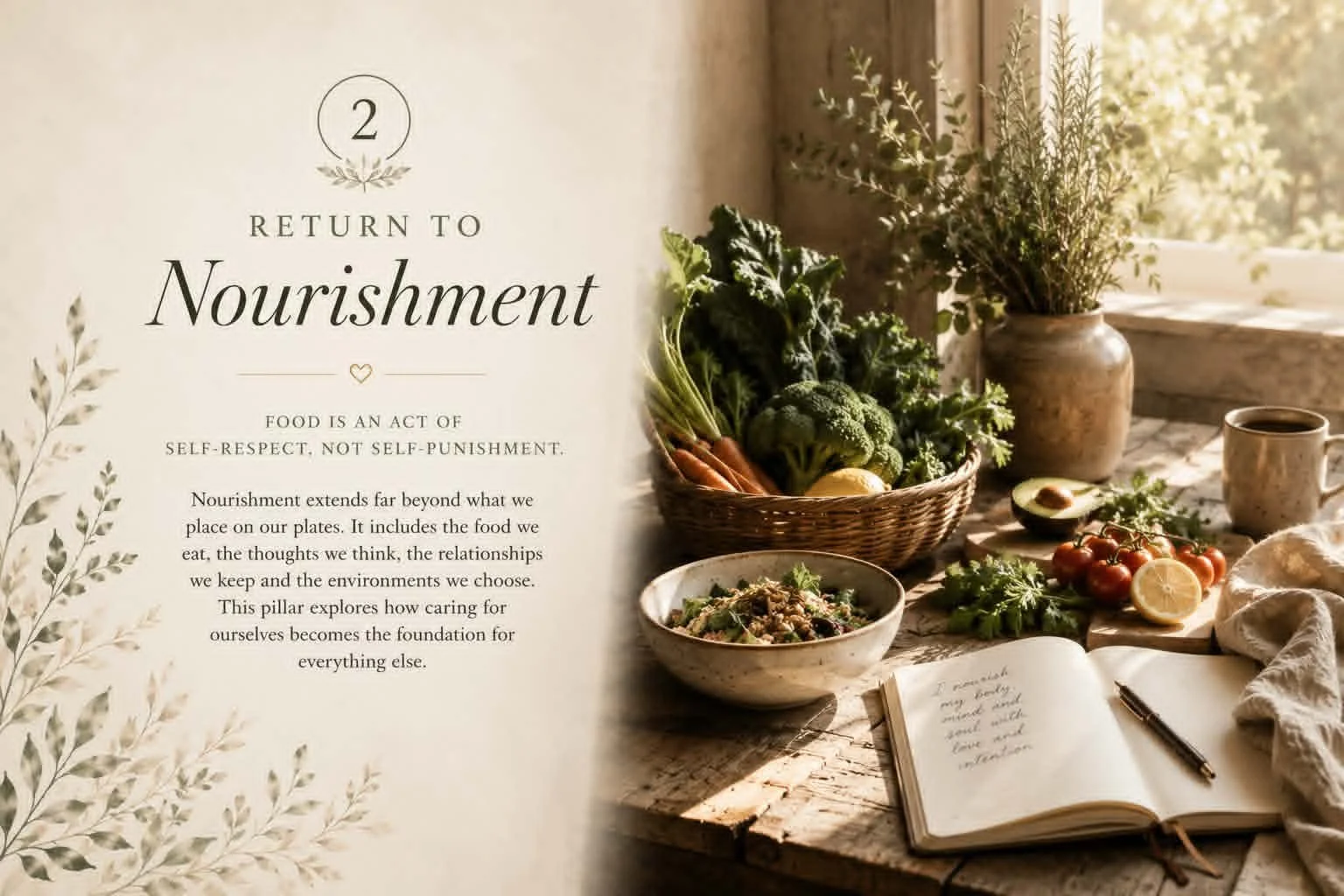
Pillar Two
Return to Nourishment
"Food is an act of self-respect, not self-punishment."
What is Return to Nourishment?
Nourishment is so much more than what we place on our plate.
It is every choice that feeds our wellbeing.
The food we eat.
The water we drink.
The conversations we have.
The books we read.
The people we spend time with.
The environments we create.
The thoughts we repeatedly tell ourselves.
Everything we consume either nourishes us or slowly depletes us.
Return to Nourishment is about becoming intentional.
Not perfect.
Intentional.
It asks us to pause before every choice and gently wonder...
"Is this nourishing the life I want to create?"
Why does this matter?
For many years I approached food as something to control.
Like many women, I learnt about calories before I learnt about nourishment.
Restriction before satisfaction.
Guilt before gratitude.
I discovered that my relationship with food reflected my relationship with myself.
When I was disconnected, I often ate without awareness, rushed meals, skipped meals or simply survived on convenience because everyone else came first.
As I began returning to myself, food became something very different.
Preparing a meal became an act of care.
Shopping became an opportunity to choose health.
Cooking became an expression of love rather than obligation.
Nourishment stopped being another task on the list.
It became a daily reminder that I mattered too.
The Science Behind Nourishment
Every cell in our body relies on nourishment.
Food provides the building blocks for our muscles, bones, hormones, immune system and brain.
Our nutritional choices influence energy levels, blood sugar regulation, inflammation, recovery, gut health and overall wellbeing.
Research continues to explore the relationship between nutrition and physical and mental health. Diets rich in vegetables, fruit, whole grains, quality protein, healthy fats and fibre are associated with better long-term health outcomes, while adequate protein supports muscle maintenance and recovery, especially as we age.
The gut and brain are also closely connected through what is often called the gut-brain axis. While this relationship is complex and still being actively studied, nutrition, sleep, stress and movement all appear to influence both digestive health and emotional wellbeing.
Food alone cannot solve every health challenge.
But it creates an environment that allows the body to function at its best.
Nourishing More Than Our Bodies
We don't just digest food.
We digest life.
The conversations we stay in.
The social media we consume.
The news we repeatedly watch.
The criticism we believe.
The love we receive.
The boundaries we honour.
Just as poor nutrition can leave us depleted, so can relationships, environments and habits that constantly drain our energy.
Return to Nourishment asks us to become aware of everything we are feeding ourselves.
How Return to Nourishment Connects to Every Other Pillar
Without nourishment...
Strength becomes difficult to build.
Stillness becomes harder when blood sugar and energy fluctuate.
Reflection becomes clouded by exhaustion.
Connection becomes more difficult when we're constantly depleted.
Purpose becomes harder to pursue when our energy is consumed by simply getting through the day.
And most importantly...
When we nourish ourselves, we reinforce the message that we are worthy of care.
That belief strengthens our Return to Self.
Living This Every Day
Nourishment doesn't have to be complicated.
It lives in small, consistent choices.
Preparing meals that support your health.
Drinking enough water.
Eating slowly enough to enjoy your food.
Buying fresh ingredients.
Sitting at the table instead of eating while rushing.
Listening to hunger and fullness with curiosity.
Choosing food because it supports your body rather than because it punishes it.
Enjoying celebrations without guilt.
Finding balance rather than perfection.
Every meal becomes another opportunity to care for yourself.
When This Pillar Is Out of Balance
Sometimes we drift away from nourishment without even noticing.
You may recognise yourself if you...
Skip meals because you're too busy.
Eat while distracted or standing up.
Feel guilty after eating.
Swing between restriction and overindulgence.
Constantly chase the next diet.
Rely on caffeine or sugar just to get through the day.
Forget to drink enough water.
Feel disconnected from what your body is asking for.
The answer isn't more discipline.
It's more awareness.
Returning to Nourishment
Returning begins with one question.
Before every meal, every commitment and every habit, pause and ask:
"Will this nourish me, or will it deplete me?"
Not every answer will be simple.
Sometimes saying yes to helping someone else nourishes your heart.
Sometimes saying no nourishes your wellbeing.
Learning the difference is part of the journey.
Reflection
Take a quiet moment to consider:
What truly nourishes me?
What consistently leaves me feeling depleted?
Do I eat with presence or urgency?
Where have I confused restriction with health?
What is one small way I can nourish myself today?
Gentle Practice
This week, choose one meal each day to eat slowly.
Put your phone away.
Notice the colours.
The aroma.
The texture.
Chew more slowly.
Take a breath between bites.
Instead of counting calories...
Count moments of gratitude.
Notice how your body feels afterwards
"Today, return with kindness. Tomorrow, return again. Healing isn't found in perfection—it is found in the courage to keep coming home.